
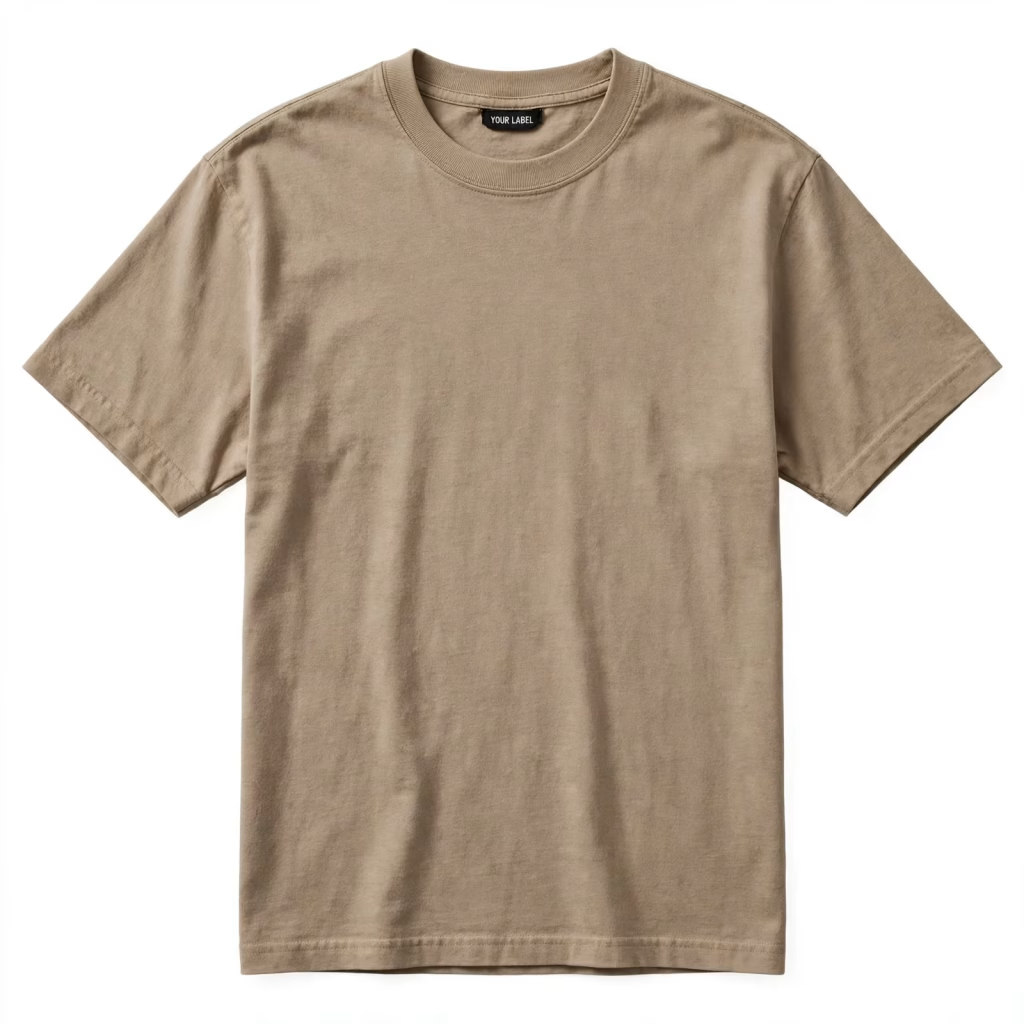
The heather tee with a retail hand feel
We work as a tri blend t-shirt manufacturer for premium blank labels and retail brands whose customers pay more for a softer shirt. The blend of polyester, cotton and rayon gives a light, draping jersey with a heathered surface that plain cotton cannot imitate, and it is the hand feel, as much as the look, that sells the garment. Premium blank labels, brands, retailers and importers in the USA, UK, Germany, Canada and Australia build their higher-priced basics on this fabric, plain under their own label or printed with soft-hand artwork. Nothing carries our name: the print, the label and the packaging are yours. Every order is made to your level: your quality, your fabric, your design and your measurement, and once a heather shade and block are approved they are held, so repeat orders come back in the same shade and the same fit.
Three fibres in one soft jersey
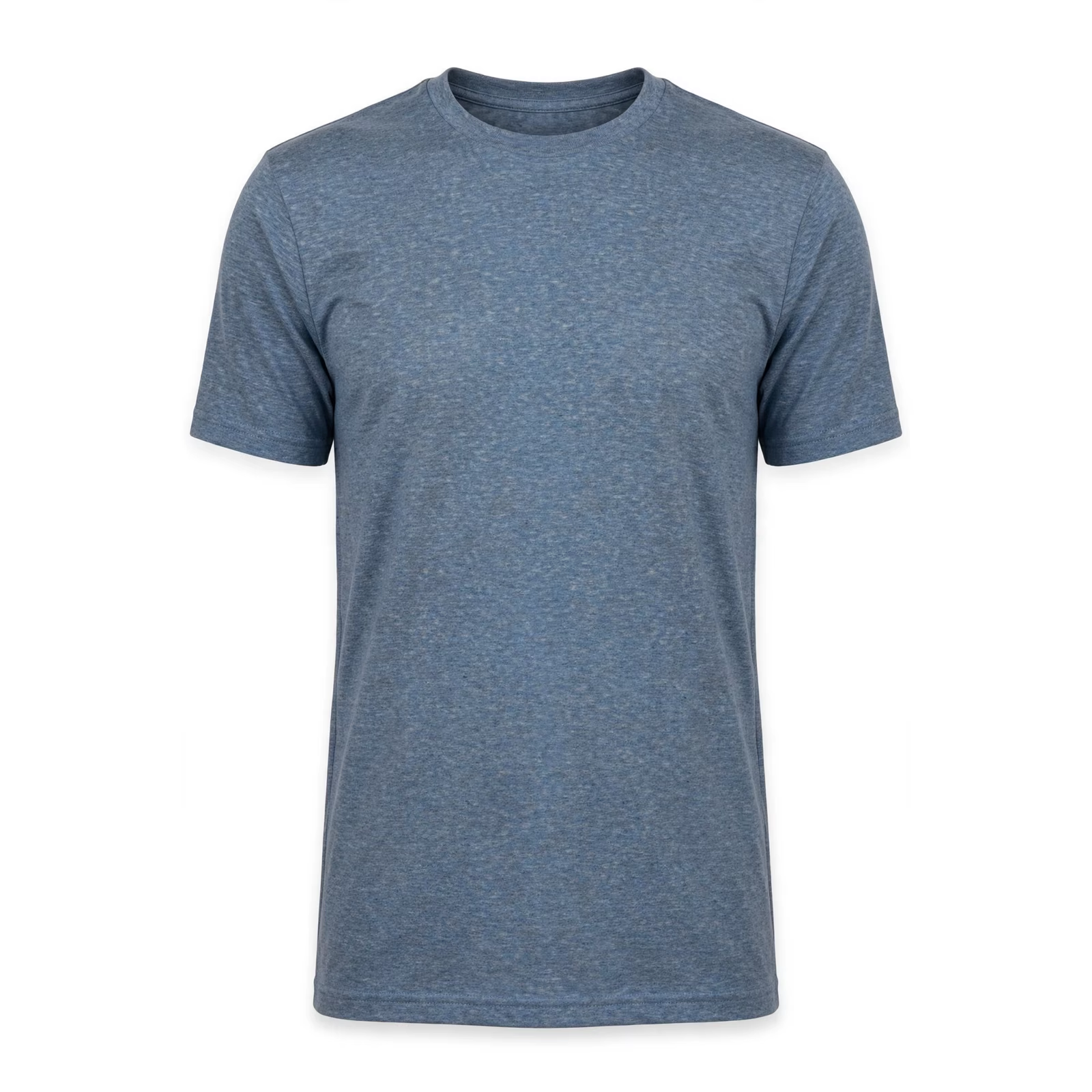
The fabric is knitted from melange yarns in a fixed recipe of 50% polyester, 25% cotton and 25% rayon. The polyester gives strength and colour fastness, the cotton gives a natural hand, and the rayon gives the drape and the slight sheen that move the shirt out of the basic category. At 150 to 160 GSM the jersey is light and fluid without being thin, and the heather effect comes from the yarn itself, not from a print, so it cannot wash off or crack. Heather shades run from pale grey through blue-grey to deep charcoal, and your own shades are developed as melange lots and approved on a swatch and a sample garment before bulk. Because three fibres take dye differently, shade agreement is checked across the body and sleeves of every lot, and the fabric is rested before cutting so the drape settles evenly.
Tri-Blend T-Shirt Supplier in Bangladesh for USA Brands
USA brands selling premium basics live on consistency: the heather shade a customer reorders has to be the shade she bought last year. Buyers looking for a polyester cotton rayon t-shirt supplier usually ask first how the shade is held, and our answer is the approved lot record: the melange yarn, the shade and the recipe are recorded against your style, and every production lot is checked against that standard before cutting. Size and care labels are set in your format with fibre content declared exactly as knitted, which matters on a three-fibre garment. Cartons are marked with style, colour and size breakdown, packing follows your instruction for your warehouse or fulfilment centre, and finished cartons are prepared for shipment from Bangladesh to your named port or forwarder with the handover documents coordinated with your agent.
Printing that suits a heather ground
A heather ground changes what a print should do. Water-based inks sit softly in the fabric and keep the shirt’s hand feel, which is why most buyers print this style with soft-hand or vintage-look artwork; the broken heather surface shows through the ink slightly and gives the design a worn-in character that suits the fabric. Discharge-style effects are sampled carefully because the three fibres react differently, and every design is struck off on the correct shade and approved by you before bulk. Embroidery is run with a backing chosen for a light, fluid jersey so the stitching does not pucker the cloth. Positions are set against the finished garment’s measurements at sampling, so the chest print sits in the same place on an XS as on an XXL.
A premium blank with your name on it
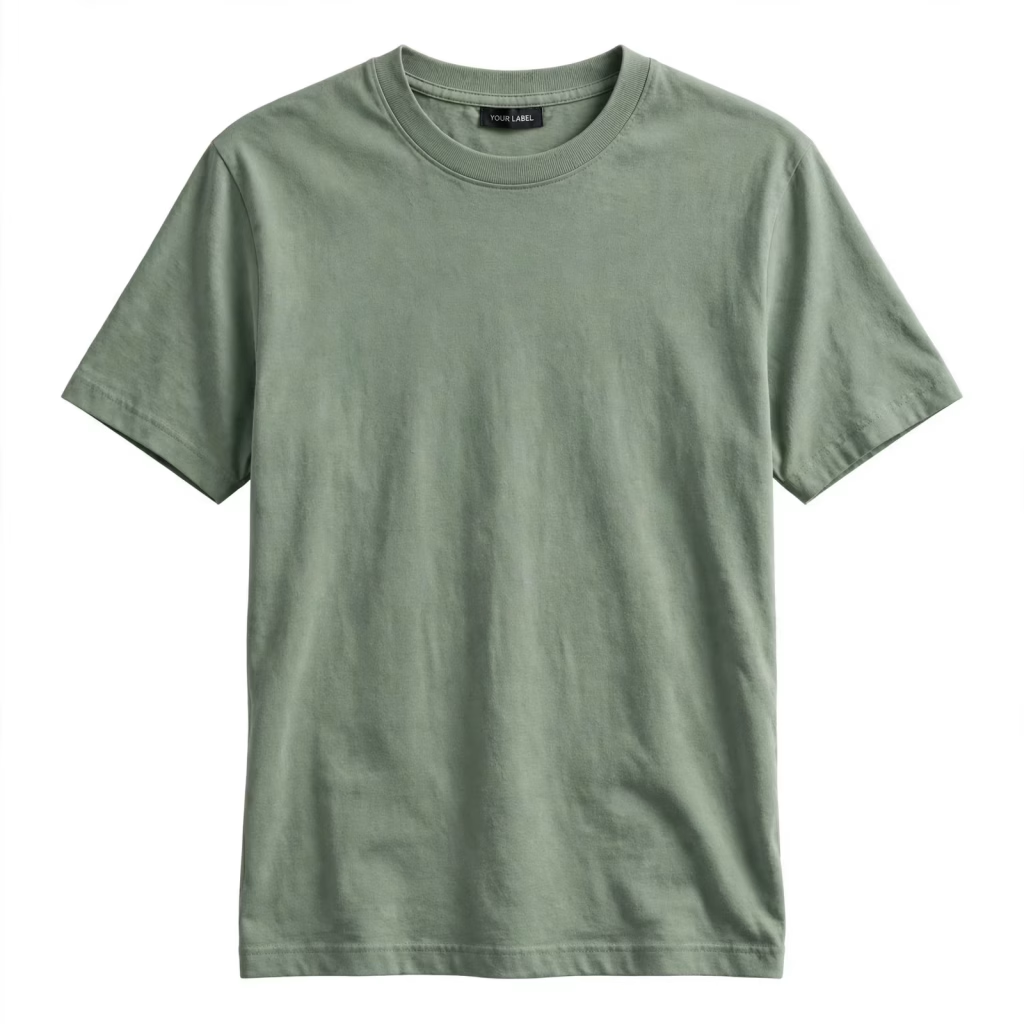
As a premium tri blend tee manufacturer we finish the garment the way a retail product is finished, not the way a promotional shirt is finished. Your woven label is sewn at the neck during production, size markings follow your format, and hang tags, tissue and packaging are fitted at finishing to your instruction. Many buyers sell this shirt plain, relying on the fabric and their label to carry the price, and the same approved block also runs printed, so a label can offer both from one sampling round. Side seams are sewn to keep the drape straight, the neck rib is a fine self-fabric binding that sits flat, and each piece is checked for shading and hand feel at final inspection, because on this fabric the eye catches a shade band quickly.
Lightweight, graded and packed with care
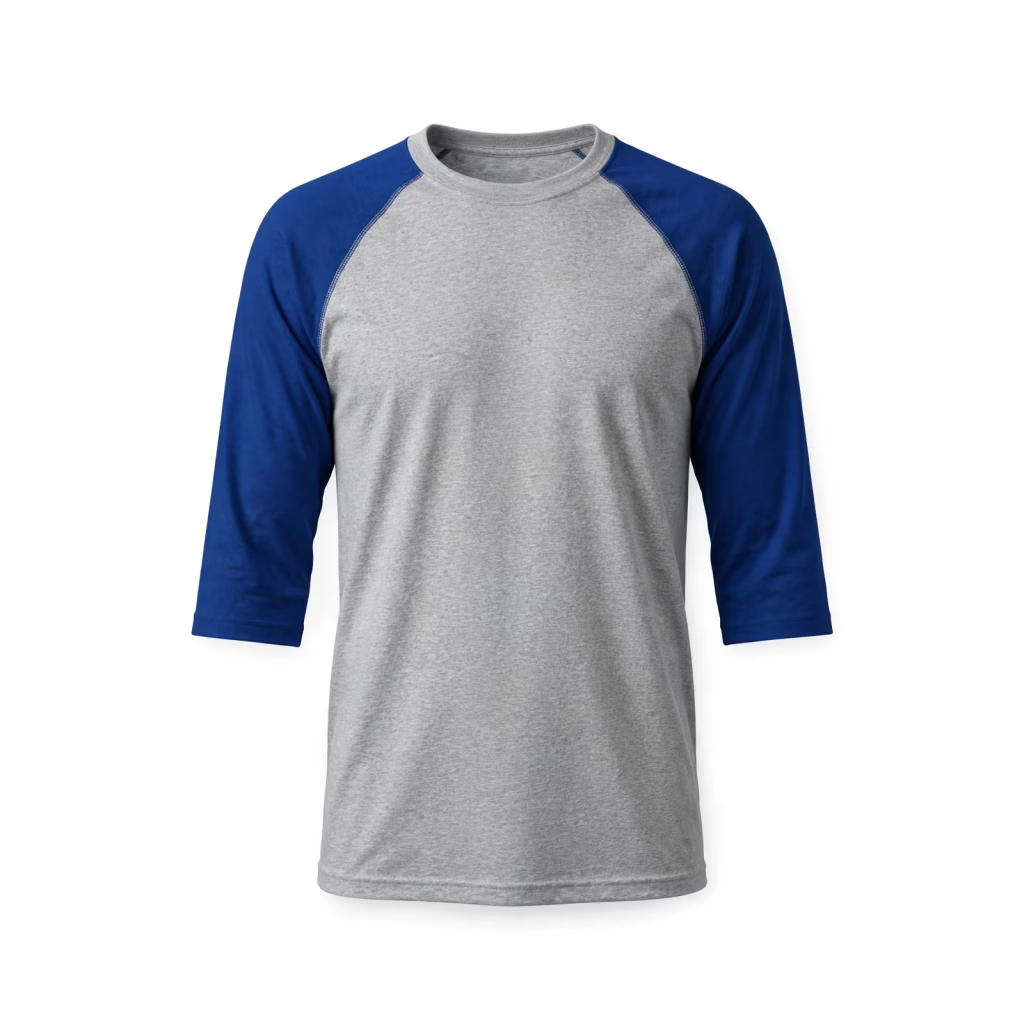
Sizes run from XS to XXL on a unisex grading worked from your own measurement chart. Chest, body length, sleeve length and neck opening are set at sampling, and the pre-production sample is measured point by point and sent for approval before the pattern is locked. A fluid fabric is graded with a little more care than a firm jersey, since it falls differently on the body, and the fit is judged on the sample garment, not on the flat pattern alone. Labels building retail programmes on triblend t shirts wholesale take that approved block across the full size run and across their heather shades. It sits inside our wider blank t-shirts range, alongside the raglan t-shirt and the baby doll t-shirt. Send a tech pack or a reference sample and we will quote the order through our how to order page, with sampling before bulk.
Questions tri-blend buyers ask us
The questions we hear most about this fabric, answered plainly.
We sell in Canada. Will the heather shade stay the same on reorders?
Yes. The melange yarn, the recipe and the approved shade are recorded against your style, and each production lot is checked against that standard before cutting. Labels carry the fibre content exactly as knitted, in the format your Canadian range requires.
How is the fibre content declared for Germany?
Exactly as knitted: 50% polyester, 25% cotton, 25% rayon, stated on the care label in your format and in the order documents. If your German range needs the declaration in a particular order or wording, it is set at sampling and held for every repeat order.
What is the minimum order for tri-blend t-shirts?
The minimum is 800 pieces per colour, with a minimum of 3,000 pieces per order. Colours, sizes and styles can be mixed inside that order total, so several heather shades can be produced together in one order.
Are samples charged, and how long does bulk take?
Samples are made to your specification and are costed and billed, so the shade, the hand feel and any print are approved before bulk. Once the sample is approved, production for basic fabrics usually takes 30 to 60 days, and the order is packed and marked to your instruction.