
Bangladesh clothing factory wholesale
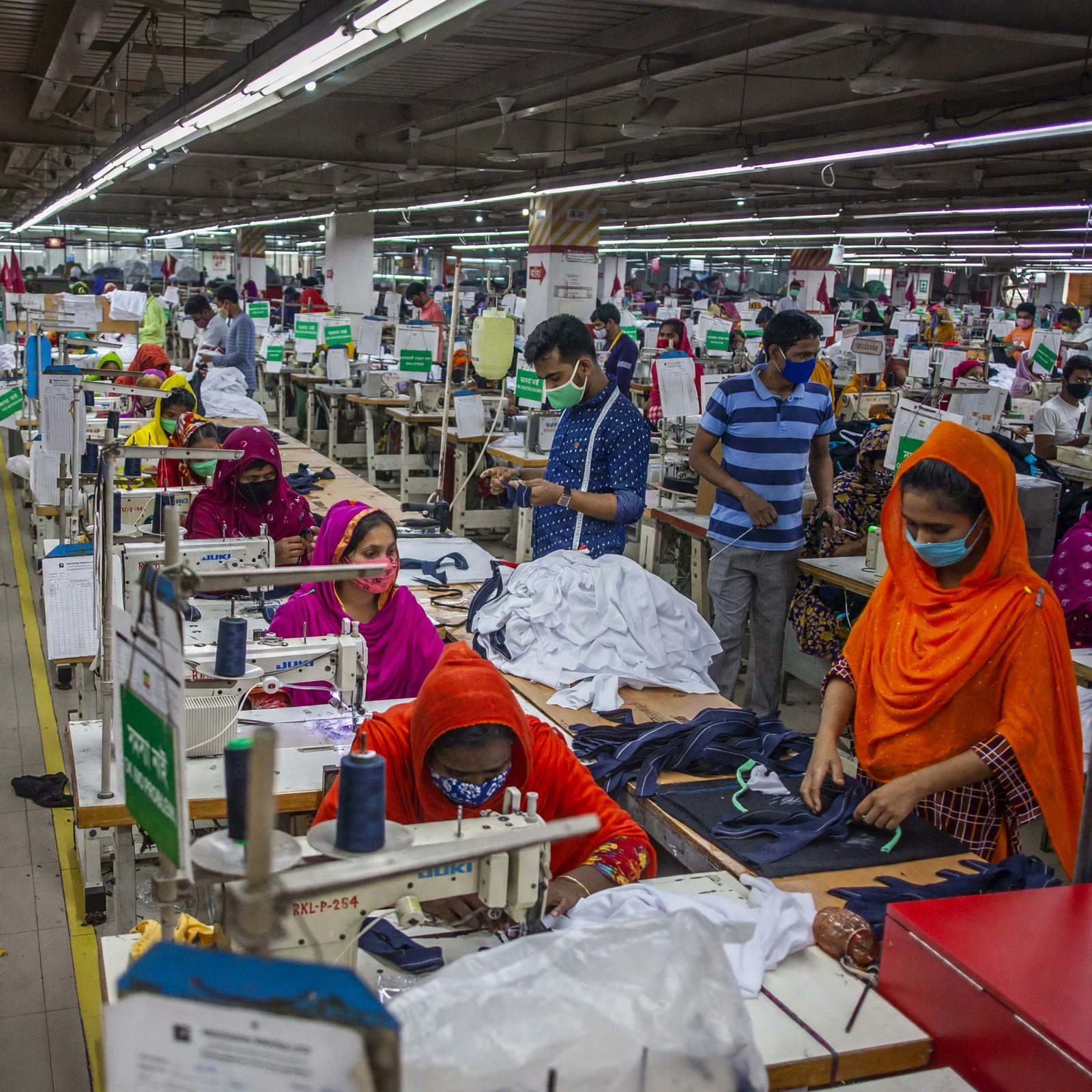
Bangladesh clothing factory wholesale: the chain it removes
Bangladesh clothing factory wholesale means one thing: your garments are bought from the factory that sews them, at the factory’s own terms, with no intermediary standing between your specification and the sewing line. It is the oldest way of buying clothing and, for a buyer with a clear specification, usually the most controllable. The factory quotes for making your order, makes it, checks it and ships it, and one named business is accountable for every stage.
That sounds obvious until you see how much clothing is bought the other way, through chains of traders, agents and buying houses, each adding a margin and each holding a piece of the information. Factory-direct buying removes the chain. What it gives you in return is control and a direct line to the maker; what it asks in return is that you do the work the chain used to do: specify clearly, check carefully and plan your timing like a professional buyer.
The chain a garment passes through when you do not buy direct
In the indirect route, your order typically travels through several hands. A local importer or trader in your market takes your order and passes it to a buying house, which passes it to a factory it works with, sometimes through a further agent. Your specification is re-explained at each step, your questions travel back through the same chain, and the factory often never learns your name, only the buying house’s programme code.
Each layer earns from the order, which is fair for work genuinely done, but the layers also filter. A measurement query that takes a day direct can take a week through a chain. A quality concern raised at packing may reach the factory after the goods have shipped. And when something goes wrong, accountability dissolves: the trader blames the buying house, the buying house blames the factory, and the factory, which never spoke to you, blames the specification it received third-hand. In a clothing factory, wholesale Bangladesh terms direct from the maker exist precisely to cut this distance out of the transaction.
None of this makes intermediaries useless. A good buying house earns its margin by knowing factories, policing quality and consolidating small buyers. The point is narrower: if you have the volume and the specification to buy direct, the chain is a cost you are paying for services you may be able to do yourself, and you should choose it knowingly rather than by default.
What changes when you buy from the factory itself
The first change is accountability. One business quoted your order, sampled it, sewed it and shipped it, and that business answers your emails. The factory direct wholesale clothing Bangladesh factories sell is production itself, not a promise to find production, so the conversation is about fabric, lines and dates rather than about what a third party might accept.
The second change is specification control. Your tech pack reaches the merchandiser who will run the order, unedited. When you adjust a measurement or a label position, the instruction lands on the floor that will sew it, and the sample that comes back shows whether it landed correctly. The third change is price structure: the margin that funded the chain is not in the quotation, although the honest buyer remembers that the chain’s useful work, quality policing and problem-solving, now sits with them instead.
The fourth change is the relationship itself. A factory that knows its end buyer plans fabric, keeps the buyer’s standards on file and flags problems early, because the next order depends on this one. Buyers in the UK who moved uniform programmes direct, French brands that shifted basics from traders to factories, and Belgian importers who consolidated their knitwear with one maker all describe the same discovery: direct buying is less a price decision than a communication decision.
What direct buying demands from the buyer
Direct buying is not the easy option; it is the involved one. It demands a specification a factory can sew from: measurements with tolerances, fabric composition and weight, construction details, label and packing instructions. It demands your own quality expectations stated in advance, what will be checked, by whom, and what happens to garments that fail. And it demands patience with sampling, because the sample rounds are where a direct relationship proves itself, and rushing them moves every unresolved question into the bulk order, where questions are expensive.
It also demands realistic timing. A factory schedules lines in sequence; your order joins a queue of other buyers’ orders, and the production window you are quoted assumes samples approved and fabric committed on the dates agreed. Buyers who treat those dates as flexible on their side and fixed on the factory’s side discover that direct buying has removed the intermediary who used to absorb the friction. The reward for doing this work properly is a supply line you understand completely, because there is nobody between you and it.
In practical terms, the direct buyer arrives with a pack the chain used to assemble for them:
- Measurements with tolerances for every size, so “wrong size” is a measurement, not an opinion.
- Fabric composition, weight and colour references fixed before costing, not during production.
- Construction and finishing details: stitching, hems, print or embroidery placement, pressing and folding.
- Label, tag and packing instructions with artwork files at production quality.
- An agreed checking standard: what is inspected, at which stages, and what happens to failures.
- A delivery window with honest slack, planned backwards from the selling season.
None of this requires a sourcing department. It requires one careful document per style and the discipline to update it, which is well inside what a serious brand already keeps for its own production.
Is it a factory, or an office with a factory’s photographs?
Direct buying makes one check essential: that the business you are paying actually makes clothing. Offices posing as factories are a known pattern in every sourcing country, and the checks that expose them are simple:
- Ask for a live video call on the production floor at a working hour, and ask to see a specific line, machine type or your own sample in hand.
- Check the legal identity: registration, export licence and factory address should name one consistent business, the same name as the bank account.
- Ask what is made in-house and what is subcontracted; a real factory answers precisely, because every factory subcontracts something and honest ones say what.
- Request current audit documents in the factory’s own name, not a partner’s or a group’s.
- Place a billed sample order first and watch how it is handled: sampling is where a factory’s real systems show.
- Be wary of a wholesale garments factory, Bangladesh or anywhere, that cannot show production but can show a warehouse of other people’s clothing; that is a stock trader wearing a factory’s clothes.
A genuine factory passes these checks without theatre, because everything asked for already exists. Our own production is shown openly on the garment factory page for exactly this reason.
The order route, from factory door to your warehouse
A direct order runs in a straight line. You send styles, quantities and specifications; the factory costs the order and makes billed samples; you approve or correct them; bulk production runs with quality checked during sewing and again at finishing; garments are packed to your instruction and cartoned under your marks; the factory prepares export documents and ships through the port. The buyer’s side of that journey, including customs and delivery at your end, is explained on our page about importing t-shirts from Bangladesh, and the order process itself, step by step, is on our how to order page.
At Siatex, production for basic fabrics runs 30 to 60 days after sample approval, with orders from 800 pieces per colour and a minimum of 3,000 pieces per order, mixed styles allowed. Those are factory numbers, quoted by the people who will sew the order, and they are the same numbers whether you arrive through a search engine, a referral or a trade fair.
Ranges made for wholesale programmes
Factory-direct wholesale suits repeat knitwear programmes best: t-shirts in their many forms, polo shirts, hoodies and sweatshirts, fleece, leggings and joggers, pyjamas and nightwear, underwear basics and kids’ clothing. These are the ranges where a factory’s fabric knowledge, line skills and quality systems compound across repeat orders, and where a buyer’s specification, once proven in sampling, can be re-run season after season with only colours and quantities changing.
Siatex Bangladesh Limited has made these ranges to order since 1987, with a capacity of 900,000 pieces per month, working to BSCI, Sedex, ISO and OEKO-TEX standards. Every order is made to your level: your quality, your fabric, your design and your measurement, and nothing is sold from stock, because a factory’s wholesale offer is its production, not an inventory. If your current route to the same garments runs through two or three intermediaries, the comparison worth making is not only price; it is how many hands your specification passes through before it reaches a sewing line.
For buyers who are still deciding between a managed online order and a direct factory relationship, our page on Bangladesh wholesale clothing online explains how the digital side of ordering works and what still needs a physical sample. The two routes end at the same place: a factory, your specification, and garments made for your label.
Starting direct without betting the season
A buyer moving from traders to a factory does not have to move everything at once. The sensible pattern is to begin with one or two styles, run them through sampling and a first production order, and judge the factory on evidence: the samples, the communication, the checking reports and the delivered cartons. If those pass, the programme widens. If they fail, the season is bruised, not lost, because the rest of the range is still with the old route.
That pattern is also how factories prefer to start. A first order proves the buyer’s specification and payment discipline as much as the factory’s making, and both sides learn how the other works while the stakes are proportionate. Direct buying rewards exactly this temperament: evidence first, volume second.
Buying direct from the factory: buyer questions
Do I need to be a large buyer to deal with a factory directly?
No. You need to meet the factory’s minimums, which at Siatex are 800 pieces per colour and 3,000 pieces per order with styles mixed, and to supply a clear specification. Many direct relationships are with mid-size brands and importers whose orders are too small for giant groups but exactly right for a specialist factory.
What do buying houses do that I would have to do myself?
Mainly factory selection, specification translation, quality policing during production and problem-solving when something slips. Buying direct does not abolish that work; it moves it to you. Buyers with a clear tech pack, a sampling round and agreed quality checks handle it routinely, and keep the margin the chain would have taken.
How can I be sure my specification reaches the sewing line unchanged?
Because there is no chain to change it. Your tech pack goes to the merchandiser running your order, the sample is made from it and returned to you, and bulk production is checked against the sample you approved. If the sample is wrong, you learn it before production, which is precisely what sampling is for.
Can a factory handle my labels, packing and barcodes?
Yes; that is standard in made-to-order production. You supply woven labels, hang tags, artwork and packing instructions, or approve the factory’s production of them to your files, and garments are folded, bagged and cartoned under your marks. Nothing about direct buying means accepting the factory’s branding; the garments leave as yours.
What is the risk if the business turns out to be a trader, not a factory?
You lose the things direct buying was meant to give you: your specification is passed on unseen, quality is policed by the party selling to you, and problems surface late with accountability split. The checks on this page, a live floor video call, matching legal identity, audits in the company’s own name and a sample order first, are how that risk is closed before a bulk order is placed.