
Who Manufactures Underwear?
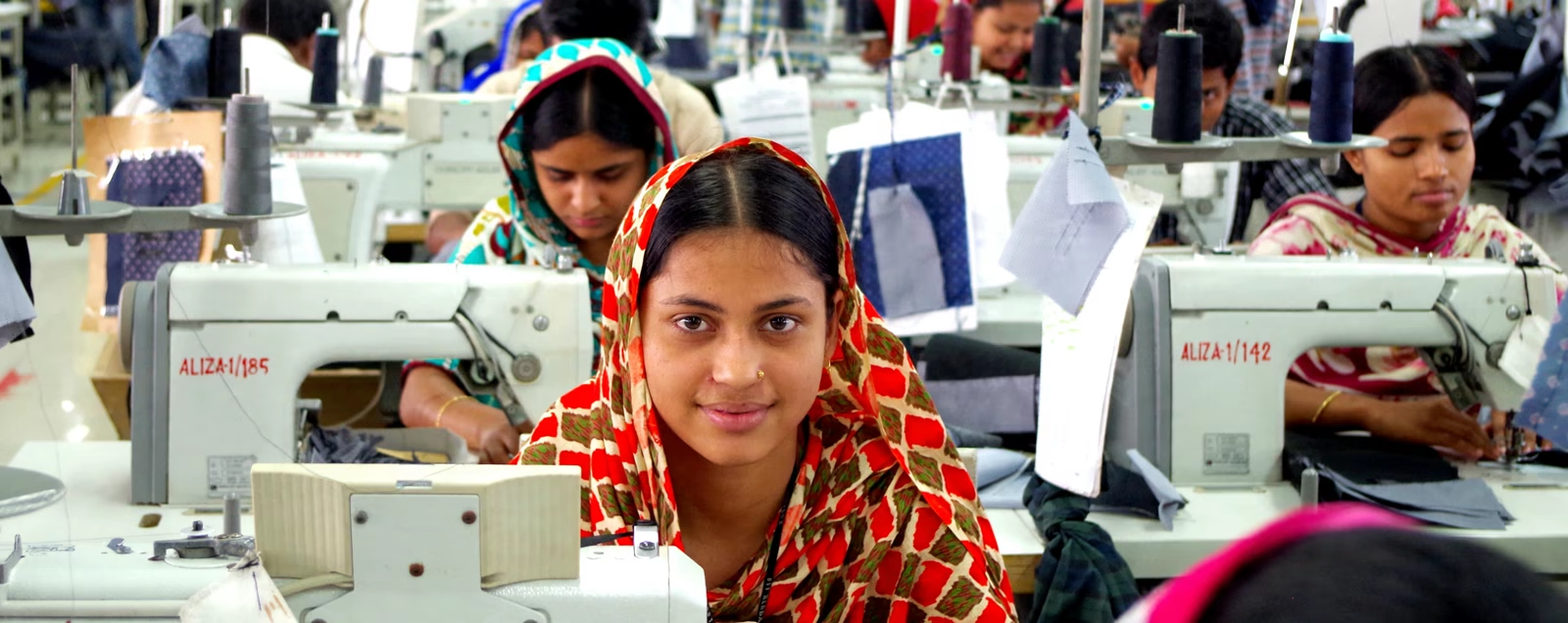
Who manufactures underwear around the world today?
The direct answer to who manufactures underwear is specialist intimate-apparel factories, mostly in Asia, working to the designs and specifications of brands, retailers and importers in other markets. Underwear is rarely made by the brand whose name appears on the waistband. A brand develops the fit, fabric and artwork, then places a made-to-order programme with a factory that owns the right knitting, elastic and stitching setup for that exact product. That division of work explains why one shop can sell briefs from one country, bras from another and thermal sets from a third, all under a single label.
A factory set up for t-shirts can sew a simple cotton brief, yet it will struggle with a moulded bra or a seamless style. Buyers therefore start with product fit rather than country alone. Our underwear range sets out the main families side by side, and their differences shape every later decision about machinery, fabric and quality control.
A trade built around specialists, not generalists
Underwear looks simple, and that impression misleads new buyers. A brief combines stretch fabric, elastic that must recover after hundreds of washes, seams that sit against skin all day, and sizing that must stay consistent across thousands of pieces. A bra adds moulding, underwire channels and strap adjusters. Small faults that would pass on an outer garment become returns here.
For that reason, intimate apparel factories organise themselves around narrow product groups. One plant may run only men’s cotton briefs and boxer shorts, another women’s briefs and camisoles, a third bras and structured lingerie. Seamless producers form a separate group again, knitting the body on circular machines so side seams disappear. The first useful question is therefore not how large the building is, but which group its lines serve every week.
- Basic knit underwear: briefs, boxer shorts, vests and women’s cotton briefs, usually in cotton or cotton-elastane jersey.
- Lingerie and bras: moulded cups, lace work, underwired styles and matching sets, needing specialist machines and fitting checks.
- Seamless styles: knitted tubes with minimal sewing, chosen for comfort lines and sports underwear.
- Thermal and layering pieces: heavier interlock and brushed fabrics, finished to different weight and warmth standards.
The main production bases and what each does best
Look at the underwear production countries as a group and a clear pattern appears: each leading base built its strength on a different combination of fabric, labour skill and product history. China is the largest underwear exporter, with long-established clusters in Guangdong, including Shantou, where lingerie, bras and synthetic styles are made at very large scale alongside the trims, lace and elastic those styles need. That supply depth is China’s real advantage.
Sri Lanka took a different path and became a specialist intimates base rather than a general volume base. The island supplies a notable share of global undergarments, and groups such as MAS and Brandix built their reputations on bras, briefs and high-specification lingerie for demanding buyers. Technical skill and fit development are the strengths most often cited there.
Bangladesh built its place on cotton knitwear first and carried that strength into underwear. Cotton briefs, boxer shorts, vests and women’s basic briefs suit its spinning, knitting and dyeing base, and lingerie capacity has grown alongside the basics as more factories added the machines and training those styles require. India completes the picture in this region, with the Tirupur knit base supplying cotton underwear and knit basics from a cluster that grew around knitting and dyeing as much as around sewing itself. A buyer is not choosing a winner; they are matching a product to the base whose skills already fit it.
How a line for briefs and bras is actually organised
Production begins long before sewing. Yarn is knitted into jersey, interlock or rib fabric, then dyed and finished to the ordered colour and weight. The fabric must keep its stretch, feel soft against skin and hold its colour through repeated washing. Elastic is sourced to a stated width and recovery, printed waistband elastic is made to the buyer’s artwork, and every trim is checked against the approved sample before cutting.
Briefs and boxer shorts then move through coverstitch and flatlock lines that leave seams flat, because a raised seam will chafe in wear. Elastic is attached under controlled tension so one size does not leave the line tighter than the next. Bras take a separate route through moulding, where cups are shaped with heat and pressure, then through assembly of cups, wings, straps and closures, with fit checked on forms.
- Knitting and dyeing: fabric made and coloured to the ordered weight, composition and shade.
- Trim preparation: waistband and leg elastic, straps, labels and closures matched to the sample.
- Flat seaming: coverstitch and flatlock work that keeps seams smooth against the skin.
- Shaping and assembly: moulding and fitting stages for bras and structured styles.
- Checking and packing: measurement, stretch and visual checks before pieces are folded, tagged and packed to the buyer’s ratio.
Why cotton knit underwear sits naturally in Bangladesh
Bangladesh is the world’s second-largest apparel exporter overall, and knitwear is one of the foundations of that position. The country spins yarn, knits fabric, dyes it and sews it within one industrial system, so a cotton programme does not depend on importing every input. For briefs, boxers and vests, that local fabric base gives continuity of supply and a clear route for checking quality before a garment is cut.
Basic underwear is also a repeat programme: the same styles return season after season in steady colours and size ratios, with changes to waistband artwork, pack format or fabric weight rather than to the whole garment. Knit factories in Bangladesh are organised for exactly that kind of repeat, made-to-order volume, and buyers tend to stay once fit and quality have settled.
Lingerie is the newer part of the story. Structured bras and lace sets demand moulding equipment, different technician skills and longer development work, and capacity in Bangladesh has been building in that direction rather than starting from the same depth as its cotton basics. An honest buyer therefore treats Bangladesh as a first-choice base for cotton knit underwear, and as a developing option for more structured styles, asking each factory what it already produces weekly. Our guide to the top 10 underwear manufacturers in Bangladesh shows how varied that factory landscape is, even inside one country and one product family.
Reading a factory before you trust it with an order
Choosing a maker begins with evidence, not with a catalogue. Ask which styles the factory has in production now, not which it can attempt, and ask to see the machines: flatlock and coverstitch machines for briefs, moulding capacity for bras. A factory that makes your product weekly will answer in detail about stitch density, elastic tension and common faults.
Samples are the next test. Check whether they match the measurement chart across more than one size, whether elastic recovers after stretching, whether seams lie flat, and whether fabric feels the same after washing. One perfect sample proves less than a consistent set across the size range, because fit consistency is where programmes most often fail in bulk.
Compliance completes the picture. Ask which audits the factory holds, when each was last renewed, and whether the certificates cover the building where the order will be made. Agree fabric, size chart, packing and delivery window in writing before production. The guides for women underwear manufacturers in Bangladesh and men underwear manufacturers in Bangladesh go deeper for each range.
What separates careful making from cheap making
Quality in underwear is not a slogan; it is a set of measurable choices. Fabric comes first: the fibre mix, the weight and the quality of the elastane decide how a brief feels, how it washes and how long it keeps its shape. Elastic comes second, because waistband and leg elastic that loses recovery turns a sound garment into a complaint within months. Stitching comes third, with flat, even seams, secure elastic joins and no loose threads on surfaces that touch skin.
Fit consistency is the fourth test, and the hardest. A medium that measures correctly means little if the large drifts. Careful factories measure across sizes and across the run, not only at the start, and keep the approved sample and chart at the line. Testing supports this: colour fastness, shrinkage and stretch recovery can each be checked, in the factory or independently.
- Fabric: stated composition and weight, checked before cutting, not assumed from the order sheet.
- Elastic: recovery after stretching, even tension, and joins that stay secure in wear and washing.
- Stitching: flat seams, even density and clean finishing on every skin-facing surface.
- Fit: measurements held across every size and checked again during the run.
- Testing: shrinkage, colour fastness and stretch results recorded for the order.
None of this requires a buyer to be a technician. It requires specific questions, washed and worn samples, and the same checks applied to every factory compared. The factories behind underwear manufacturers worldwide earn repeat orders on this ground, not on a single low quotation.
How buyers in different markets place their orders
Demand reaches these factories through a few familiar routes. In Germany, buyers for basics programmes specify fabric, testing and packaging in close detail at the start, then repeat proven styles. Buyers in the Netherlands often work through import and distribution businesses serving several retail customers from one programme, so clear size ratios and pack formats matter from the first quotation.
The UK brings a mix of high-street programmes and independent labels. In the USA, volume programmes and private-label ranges dominate, with labelling and packing requirements settled before production. The UAE appears mainly as a regional buying and re-export point for basics, smaller in scale, but one where clear specification still decides whether a shipment moves smoothly onward.
Across all these markets the pattern is the same: specification or sample first, development and pricing next, sample approval, and only then bulk production, in that buyer’s sizes, colours, waistband artwork and packing.
Where Siatex fits as a made-to-order maker
Siatex Bangladesh Limited is a knitwear manufacturer and exporter since 1987, with production in Bangladesh and a capacity of 900,000 pieces per month. Underwear is one of its established ranges, alongside t-shirts, polo shirts, hoodies, sweatshirts, fleece and pyjamas, made on the same made-to-order basis as every other range: no order is cut before it is placed. Buyers come here for direct contact with the merchandiser running their order.
The working terms are stated plainly. The minimum is 800 pieces per colour and 3,000 pieces per order, with mixed styles allowed inside that order total, and production takes 30 to 60 days for basic fabrics once samples are approved. Samples are billed, because each sample is knitted, dyed and sewn to the buyer’s own specification, and no prices are listed on this site, because price follows fabric, quantity and specification too closely for a general figure to mean anything. Every order is made to your level: your quality, your fabric, your design and your measurement.
Compliance is documented on our certifications page, covering BSCI, Sedex, ISO and OEKO-TEX standards, and the ordering route is set out on our how to order page. Further background reading is gathered on our blog page.
Questions buyers ask about global underwear making
Which country exports the most underwear?
China is the largest exporter, supported by deep clusters in Guangdong, including Shantou, where lingerie and synthetic styles are made alongside their own trims. Other bases lead in narrower fields, which is why buyers match the product to the country instead of following volume alone.
Why do bras and briefs often come from different factories?
Because they need different machines and skills. Briefs run on knitting, cutting and flat-seaming lines, while bras also need moulding, shaped components and fit work on forms. Many factories specialise in one family so that their operators and equipment stay practised on the same construction every week.
How can a buyer check elastic and stitching quality before bulk production?
Stretch the sample elastic repeatedly and see whether it recovers, wash the sample, then check that seams still lie flat and measurements still match the chart. Ask the factory what stitch density and tension settings it uses, and approve a full size set rather than a single sample size.
What minimum quantities should a new underwear brand expect?
Serious made-to-order factories set a minimum per colour as well as a minimum per order, because dyeing and line setup carry fixed work. At Siatex the figures are 800 pieces per colour and 3,000 pieces per order, with mixed styles allowed, which lets a new brand spread its first programme across several styles.
How long does made-to-order underwear production usually take?
For basic fabrics, allow 30 to 60 days for production once samples have been approved, plus the sampling time before that stage and shipping time afterwards. Lace, printed elastic and other special trims can extend the early stages, so the timetable should be agreed against the exact specification.