
Which clothing brands are manufactured in Bangladesh?
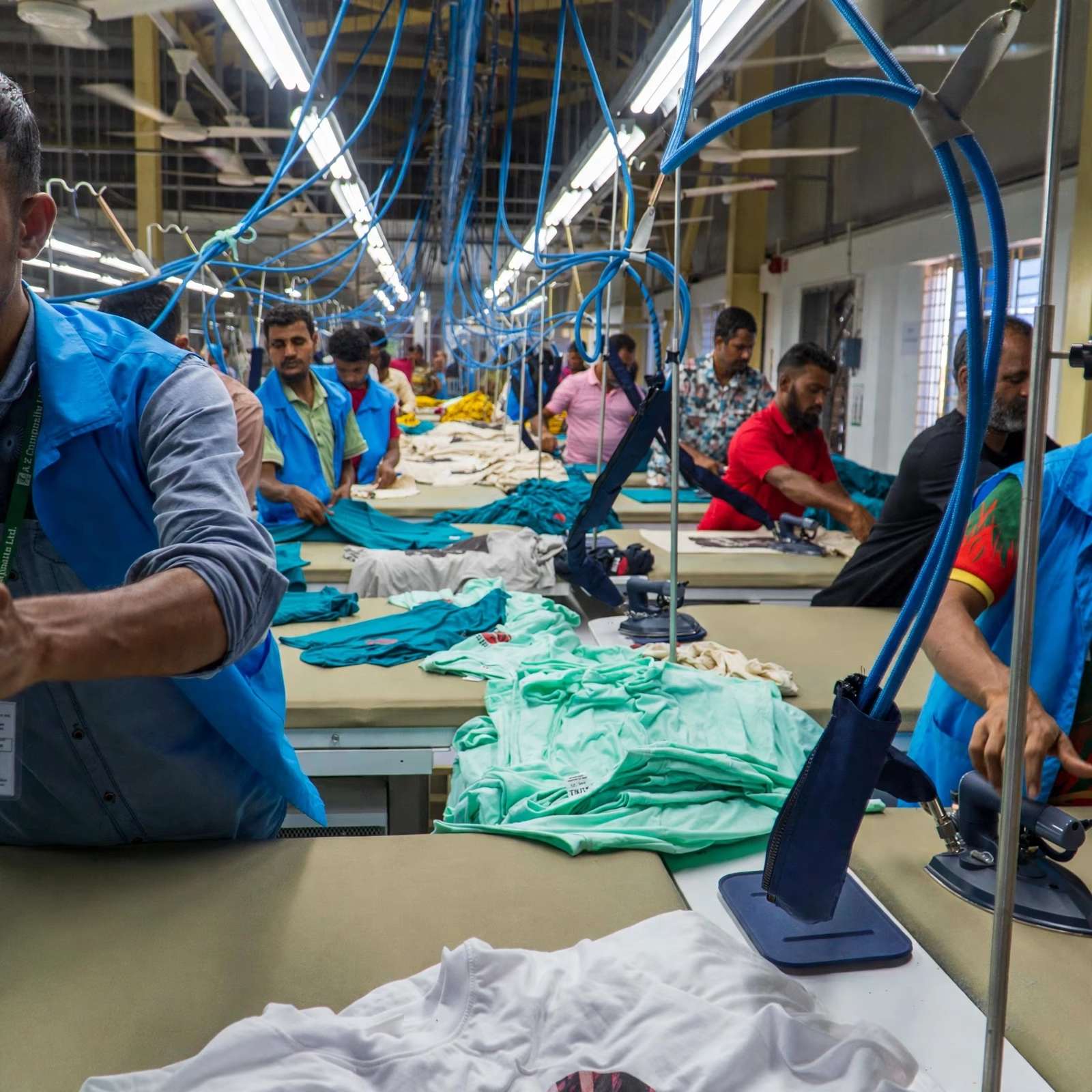
The short answer: most of the high street
The clothing brands manufactured in Bangladesh include most of the names on a British, European or American high street. H&M, Zara’s owner Inditex, Primark, Marks & Spencer, Next, C&A and dozens of other household labels place orders here every season, and between them the ten biggest buyers took about 29 per cent of everything the country exported in the 2023-24 fiscal year. If you own clothes from a mainstream Western retailer, the odds are strong that some of them were sewn here.
Bangladesh sits near the top of world garment exports, and its factories supply retailers on every continent. What surprises most shoppers is not that one or two famous names buy here, but how complete the list is: fashion chains, supermarkets, sportswear labels and value retailers all draw on the same factory base, often on the same industrial estates, sometimes in the same buildings.
No brand owns the factory: how buying here works
The first thing to understand is that none of these brands owns a factory in Bangladesh. The global brands made in Bangladesh are produced in factories the brands do not own, by independent Bangladeshi companies that take orders from several buyers at once. The brand designs, specifies and sells; the factory cuts, sews, finishes and ships. That separation is the normal structure of the whole industry, not a Bangladeshi exception.
Because the factories are independent, the relationship is governed by orders, audits and codes of conduct rather than by ownership. In practice it runs like this:
- Design and specification stay with the brand, which sends the factory a technical pack covering fabric, measurements, trims and packing.
- The order is placed with an approved supplier factory, at an agreed quantity per style and colour, for an agreed delivery window.
- The factory produces the order on its own lines, with its own workers, under its own management.
- Audits and inspections check the factory against the brand’s code of conduct, covering safety, working conditions and quality systems.
- Finished garments ship under the brand’s label, and the brand’s name, not the factory’s, is what the shopper sees.
The system is more transparent than most people expect. The major brands publish their supplier lists openly, naming the factories that make their clothes, and those lists are where the counts later in this page come from. A shopper, a journalist or a competing buyer can read them freely.
The biggest buyers, ranked by what they spend
Customs figures for the 2023-24 fiscal year, reported by the newspaper Prothom Alo, rank the buyers by value. H&M stood first, buying about 2.59 billion dollars of garments from more than 200 factories. Inditex followed at about two billion dollars, with Primark third. Behind them came Bestseller, Marks & Spencer, C&A, Uniqlo, LPP, Next and Pepco, and the top ten together accounted for roughly 29 per cent of all garment exports. Walmart, which buys much of its clothing through importers, still bought about 400 million dollars directly.
The ranking is also a map of where the brands live. H&M comes from Sweden, Inditex and Mango from Spain, Bestseller from Denmark, LPP from Poland and Uniqlo’s owner Fast Retailing from Japan. Bangladesh does not supply one country’s retailers; it supplies the world’s. The brands’ own published supplier lists, read in October 2026, show how deep each one’s factory network runs:
- Next lists 194 manufacturing sites in Bangladesh.
- H&M Group lists 188 manufacturing sites.
- Lidl lists 168 manufacturing sites.
- Primark lists 142 manufacturing sites.
- Target lists 86 manufacturing sites.
- Tesco lists 67 manufacturing sites.
- PVH, owner of Calvin Klein and Tommy Hilfiger, lists 55 manufacturing sites.
- Gap lists 50 manufacturing sites.
- Fast Retailing, owner of Uniqlo, lists 45 manufacturing sites.
These counts move as lists are updated and factories join or leave a programme, so treat them as the shape of each network rather than a permanent score. Even read loosely, they make the point: a single brand may work with more factories here than many countries have in total.
A long list should not be read as a brand running every one of those factories at full stretch. Buyers keep wide networks for practical reasons: capacity in a peak month, a second source when a line is full, different factories for different product types. The network is a bench, not a single team, and one factory may sew for several of the names in this article within the same season.
The names, grouped by the kind of shop
The high-street fashion group is the most visible: H&M, Inditex through Zara, Mango, Marks & Spencer, C&A, Next, Bestseller, LPP and Esprit all source clothing here. These are the labels a shopper meets in a city-centre store, and their orders cover everything from basic t-shirts to seasonal fashion pieces in knit and woven fabrics.
The supermarket and value group buys in the largest volumes of all: Primark, Lidl, Aldi, Tesco, Sainsbury’s, George, Pepco, Target and Walmart. Supermarket clothing sells on price and reliability, which means long runs of basics, family clothing and schoolwear sewn to a tight specification, season after season, by factories that specialise in exactly that discipline.
The third group is sportswear, denim and casual clothing: Puma and Decathlon on the sports side, Levi’s in denim, and Gap and PVH in everyday casual wear. Their products differ, but they share the same requirement: consistent quality at volume, in factories audited to international standards. Between the three groups, there is hardly a mainstream clothing shop in the West whose rails hold nothing from Bangladesh.
What each kind of buyer orders here
Different buyers use the country for different parts of their range. Fashion chains split their orders: fast-turning fashion pieces are often made closer to home, while the knitwear, basics and denim that fill most of the shop floor come from Bangladesh in planned programmes. The country’s deepest skill is knitwear, the t-shirts, polo shirts, sweatshirts and fleece that every chain sells all year round.
Supermarkets and value retailers lean on the country for the dependable core of their clothing: children’s wear, school uniforms, underwear, nightwear and family basics, where the garment changes little from season to season and the factory’s consistency matters more than novelty. Sportswear and denim buyers use it for training wear, fleece and jeans, products where Bangladesh’s combination of capacity and workmanship is hard to match at the same cost level.
All of this runs on a calendar set months ahead. Fabric is booked, line time is reserved and shipping space is planned around the selling seasons of the northern hemisphere, so the factory base works to a rhythm the chains established long ago. A smaller buyer joining that base joins the same rhythm: samples in one season, bulk in the next, and little room for improvisation in between. Factories prefer it that way, because a planned order is a well-made one.
How to check where your own clothes were made
The simplest check is the care label inside the garment. The country named there is the legal origin of that piece, the country where it was made, whatever the brand’s home country may be. A Spanish brand’s shirt can be, and very often is, Bangladeshi in origin, and the label is obliged to say so.
Shoppers often confuse two different statements on clothing. A swing tag may say where a brand is based or where a garment was designed; the care label says where it was made. Only the second is the legal origin, and only the second answers the question this page is about. A label reading Made in Bangladesh on a Swedish, Spanish or Japanese brand is not a contradiction. It is the system working exactly as the first sections described.
For the fuller picture, use the brands’ published supplier lists. Most major retailers post them on their own websites, naming their supplier factories country by country, and the lists are updated as networks change. The most searched single example gets its own page on this site: whether Zara clothes are made in Bangladesh, and how to read the label that answers it.
The honest limit: who does not buy here
One part of the fashion world is absent, and honesty requires naming it. The big luxury houses, Louis Vuitton, Dior, Chanel and Gucci among them, do not buy directly from Bangladesh. Their production sits in other countries, under different arrangements, and a luxury garment claiming a Bangladeshi origin should be treated with suspicion. Bangladesh’s strength is the mainstream: high-street, supermarket, sports and value clothing, made in very large volume to audited standards. Within that mainstream, its position is close to complete.
The boundary also runs the other way. Because the luxury names are absent, a shopper should not expect the country’s factories to be set up for luxury work: hand-finished couture detailing and very small runs are not what this industry is built for. Its excellence is repeatable quality at scale, and the brands listed here buy it for exactly that.
What this means for a smaller brand
A smaller brand reading this list sometimes draws the wrong conclusion: that this factory base is reserved for giants. The opposite is true. The same independent factories that sew for the chains also make own-label clothing for mid-size buyers, importers and online brands, because an independent factory’s order book is built from many buyers, not one. The chains take the largest share of capacity; they do not take all of it, and they do not set the terms for everyone else.
What a smaller buyer needs is not H&M’s volume but a factory whose normal order size matches theirs, with the same audit discipline the chains demand. The route in is the standard one: specification, samples, then bulk production made to order, set out step by step on our page about importing t-shirts from Bangladesh. The presence of the world’s biggest buyers here is, for a smaller brand, a form of reassurance: the system has already been tested at a scale far beyond anything they will ask of it.
Where Siatex fits in this picture
Siatex Bangladesh Limited is one of the independent factories behind labels like these: a knitwear manufacturer and exporter that has made clothing to order since 1987, with a capacity of 900,000 pieces per month. It claims no brand named on this page as its customer. What it offers a buyer is the same structure the chains use, at a human scale: your specification, your label, your packing, produced under BSCI, Sedex, ISO and OEKO-TEX standards. Our garment factory page shows where the work happens, and our certifications page sets out the standards in detail.
Every order is made to your level: your quality, your fabric, your design and your measurement. That sentence is the whole difference between buying a label’s surplus and having your own clothing made: the garment starts from your specification, not from a warehouse shelf.
Clothing brands manufactured in Bangladesh: buyer questions
Which brands manufacture in Bangladesh?
Most of the mainstream ones. By spending, the leaders are H&M, Inditex, Primark, Bestseller, Marks & Spencer, C&A, Uniqlo, LPP, Next and Pepco, with supermarkets such as Tesco, Lidl and Aldi, and names such as Mango, Gap, Puma and Levi’s also sourcing here. The full picture is in the sections above.
Do these brands own their factories in Bangladesh?
No. The big brands own no factories here. They place orders with independent Bangladeshi supplier companies, audit them against their codes of conduct, and publish lists of the factories they use. The factory that made a garment is an independent business that also makes clothing for other buyers.
Are any luxury brands made here?
Not directly. The large luxury houses, including Louis Vuitton, Dior, Chanel and Gucci, do not buy directly from Bangladesh. The country’s production serves the high street, supermarkets, sportswear and value retail, which is where its scale and skill are concentrated.
How can I find out which factory made a garment?
The care label gives the country of origin, not the factory. To go further, read the brand’s published supplier list, which names its factories country by country. Those lists cannot usually tie one garment to one factory, but they show the network that produced it.
Can a small brand use the same factory base as the big chains?
Yes. The factories are independent businesses with many buyers, and own-label production for mid-size brands is a normal part of their order books. A smaller buyer works to minimums far below chain volumes, typically from 800 pieces per colour with a minimum order of 3,000 pieces, and gets the same audited production system the chains rely on.